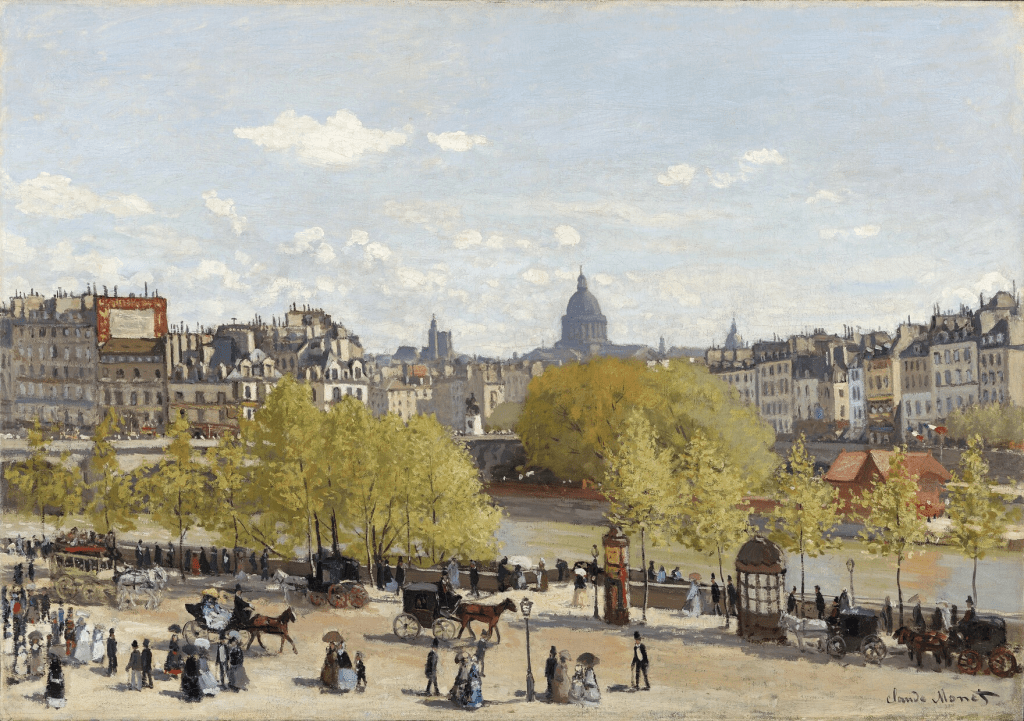
Nowadays, Paris is almost synonymous with cream-colored buildings, idyllic black wrought-iron balconies, and wide boulevards dotted with monuments. But until the mid-19th century, the city looked very different. Paris was a gloomy city, full of narrow, dark alleyways and patched-up medieval buildings, with hardly any space for modern amenities. The center was densely populated, sanitary conditions were abysmal, and traffic was a swirling chaos. Epidemics regularly claimed thousands of lives, underscoring the need for large-scale reforms.
Paris, a transformational city
In the second half of the 19th century, Paris took on a radically new appearance. Emperor Napoleon III had grand plans and commissioned city architect Georges-Eugène Haussmann to thoroughly modernize the city.
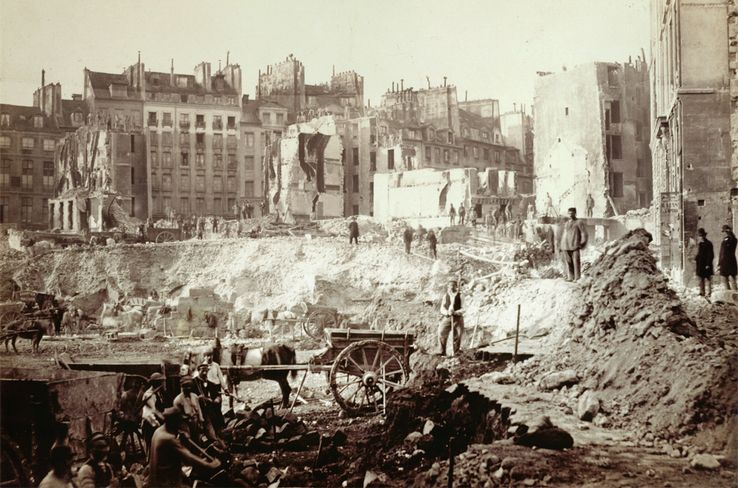
Left: Between Rue de l’Échelle and Rue Saint Augustin (1877) – Brown University Library
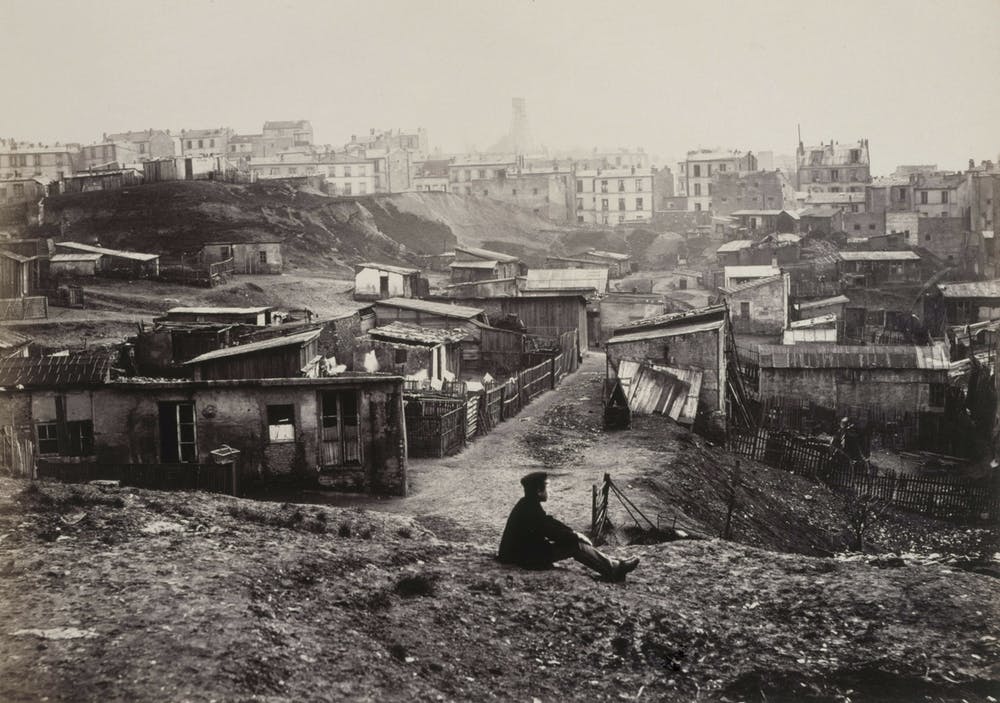
Right: Top of the rue Champlain in the 20th Arrondissement (1877)–Metropolitan Museum of Art
What followed was an immense transformation. More than 20,000 houses were demolished, narrow alleyways gave way to wide boulevards and large squares. New neighborhoods emerged, and green parks such as the Bois de Boulogne and the Bois de Vincennes provided Parisians with fresh air and space, while stations, department stores, and theaters transformed Paris into a vibrant economic and cultural center.
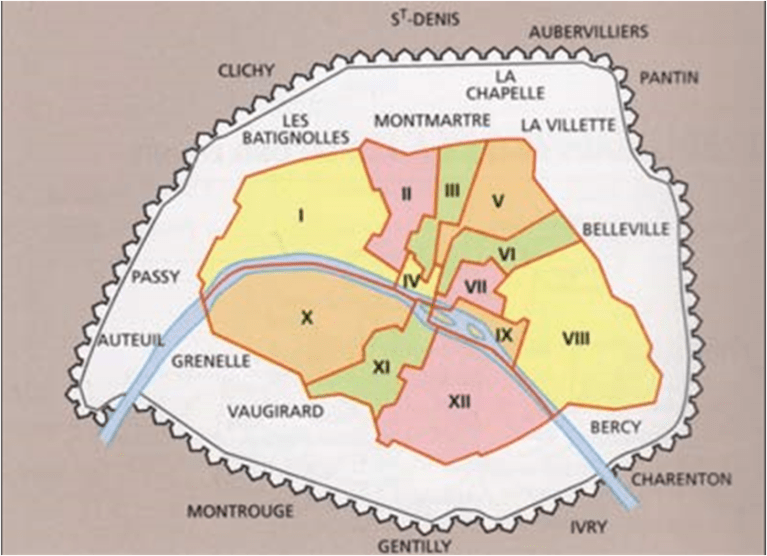
Paris before and after 1860 – horloge-edifice.fr
The working-class neighborhoods of Montmartre, Batignolles, and Belleville were annexed, nearly doubling the size of Paris and adding half a million residents, which led to significant social unrest.
Paris, a revolting city
Not everyone benefited from Haussmann’s modernization. While the affluent bourgeoisie enjoyed the newfound grandeur of Paris, workers and the lower classes felt increasingly marginalized. Rents soared, and those who could no longer afford them were forced to move to the outskirts of the city, further away from work and essential services.
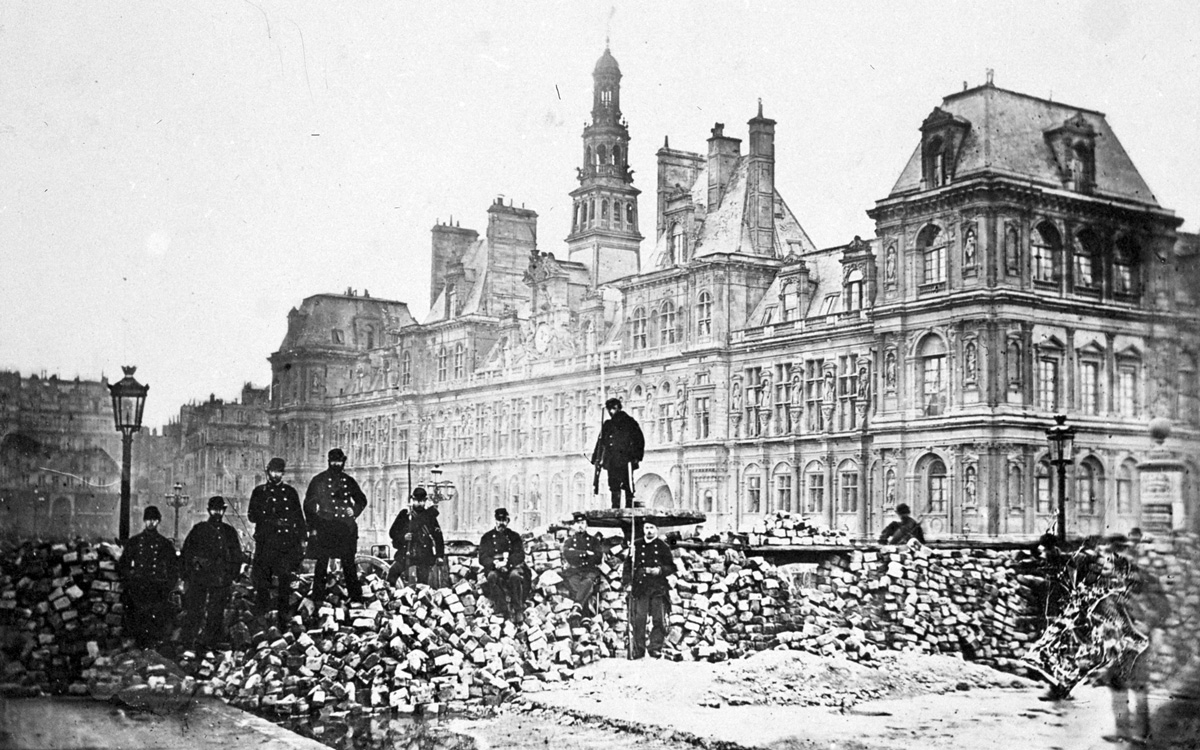
This social tension erupted in 1871, following France’s defeat in the Franco-Prussian War. Emperor Napoleon III was overthrown, and Paris descended into chaos. On March 18, 1871, revolutionaries took control of the city and declared the Paris Commune—a radical government that sought to establish an egalitarian society and held power for nearly 72 days. But the dream of a revolutionary Paris was brutally crushed. In May 1871, during the infamous “Bloody Week” (Semaine Sanglante), government troops stormed the city and retook Paris with unprecedented brutality. Thousands of Communards were executed, imprisoned, or deported.
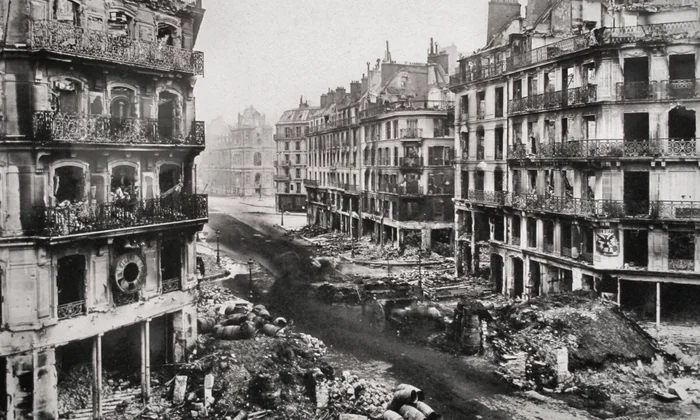
Left: Corner of Rue de Rivoli and Rue Saint-Martin – Library of Congress
Right: Barricade in front of Hôtel de Ville – Roger Viollet
Paris, an inspirational city
As contemporary Paris emerged from the chaos of Haussmannian renovations, a very different revolution was unfolding in the art world: the birth of Impressionism.
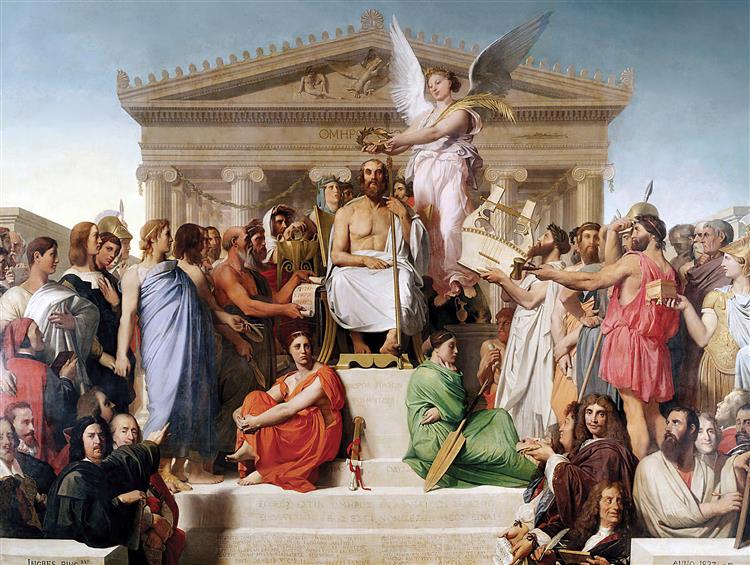
The modern city offered artists such as Claude Monet, Pierre-Auguste Renoir, and Edgar Degas a completely new perspective on Paris. The sunlit boulevards, the reflections on the Seine, and the lively parks inspired a painting style that radically broke with the past. The sterile, academic art of previous generations symbolically died with the passing of Jean-Dominique Ingres in 1867.
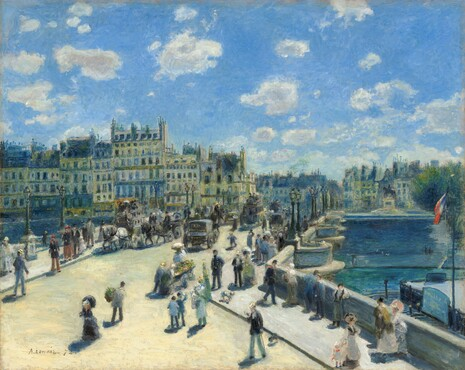
Left: Auguste Renoir – Pont Neuf (1872) – National Gallery of Art
Right: Jean-Auguste Dominique Ingres – The Apotheosis of Homer (1827) – WikiArt
The new Parisian cafés, terraces, and city squares became the meeting places of the modern bourgeoisie—and the locations where Impressionists immortalized their city. Manet, Pissarro, and Caillebotte not only captured the beauty of Paris but also the social divide that came with Haussmann’s renovations. .
The exhibition ‘New Paris’ at the Kunstmuseum Den Haag, running until 9th of June 2025, showcases approximately 65 Impressionist masterpieces by artists such as Berthe Morisot, Edgar Degas, Pierre-Auguste Renoir, Édouard Manet, Frédéric Bazille, Gustave Caillebotte, Paul Cézanne, Armand Guillaumin, and Mary Cassatt. These works illustrate how the transformed urban landscape of Paris served as a source of inspiration for these artists, while also shedding light on the darker side of modernization: as the city grew and flourished, the less fortunate were often pushed to the periphery. Photographs and prints by Honoré Daumier and photographer Félix Nadar reveal the shadow aspects of this transformation, including the impact of the Paris Commune.
Paris, a contradictory city
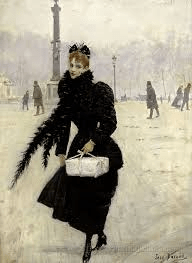
Jean Beraud – Parisienne on Place de la Concorde (ca. 1885) – Wikimedia Commons
Today, Paris remains a city of contrasts. As you stroll along its wide boulevards or admire an Impressionist masterpiece at the Musée d’Orsay, you can still sense the echoes of the 19th century—the grandeur of Haussmann, the revolutionary spirit of the Commune, and the artistic freedom of the Impressionists.
Paris is not just a city of light, but also a city of change—and it always will be.
New Paris: From Monet to Morisot
Until 9th June 2025
Kunstmuseum Den Haag
Stadhouderslaan 41
2517 HV Den Haag
10:00-17:00
Closed on Mondays
Tickets
Cover Image: Claude Monet – Quai du Louvre (1867) – WikiArt



Leave a Reply