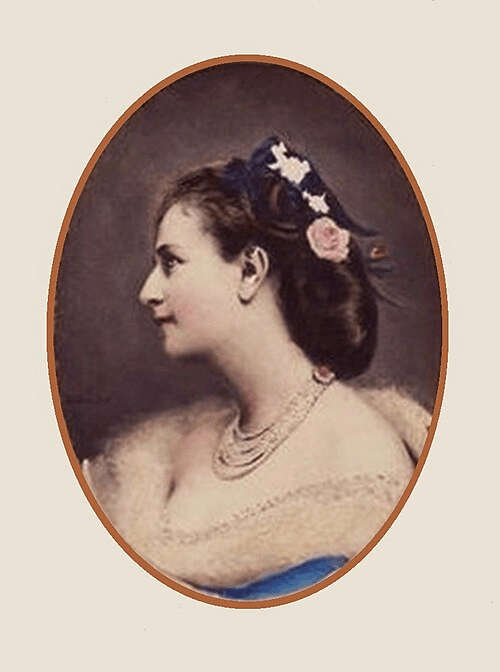
Four years ago, I stumbled upon the story of a woman who has lingered in my thoughts ever since. She wasn’t a queen, a writer, or a revolutionary, but her life was remarkable nevertheless. History remembers her as Marguerite Bellanger, but she entered this world bearing a different name.
Humble beginnings
Marguerite Bellanger was born as Juliette Leboeuf on June 9, 1838, in a modest village about 300 kilometers from Paris. Her family was working-class, and she herself would become a washerwoman in her early teens. Nothing in her life nor family history suggested that she would one day become one of the most talked-about women in 19th-century Paris.
But Juliette was not one to accept the path laid out for her. She was fiercely determined to rise above her background. She taught herself to read and write, as a first act of self empowerment. A second act would follow when she began a relationship with a lieutenant stationed in her hometown in 1854. He introduced Juliette to the world of horseback riding, teaching her not only the traditional sidesaddle posture but also the balanced seat, which at the time was strictly reserved for men. Thanks to him, she was also able to perform equestrian tricks.
Yet for all he gave her, Juliette came to a hard truth: this relationship would never be her ticket out of poverty. So when a travelling circus arrived in town, she saw her chance. She broke things off and joined the circus as an acrobat and dancer, trading stability for freedom and adventure.
A journey to a better life
Eventually, the circus made its way to Paris, and so did Juliette. Having reinvented herself under the name Marguerite, she decided to leave the circus behind and try her luck on the stage. Her acting debut turned out to be a complete disaster, so much so that she vowed never to set foot on stage again.
Still, Marguerite wasn’t about to fade into the background. Her desire to escape poverty and claim her place in the world burned as fiercely as ever. Only now, she would take a different route: she set her sights on the Parisian elite. Determined to rise, she began to attract wealthy lovers, using the skills she had learned in the circus to captivate, entertain, and stir just enough controversy to stay in the public eye.
She let herself be photographed in men’s clothes (an act for which she had to request the approval of the police), she entered into a party while walking on her hands,…

Marguerite Bellanger wearing men’s clothes (1863) – Bibliothèque Nationale de France
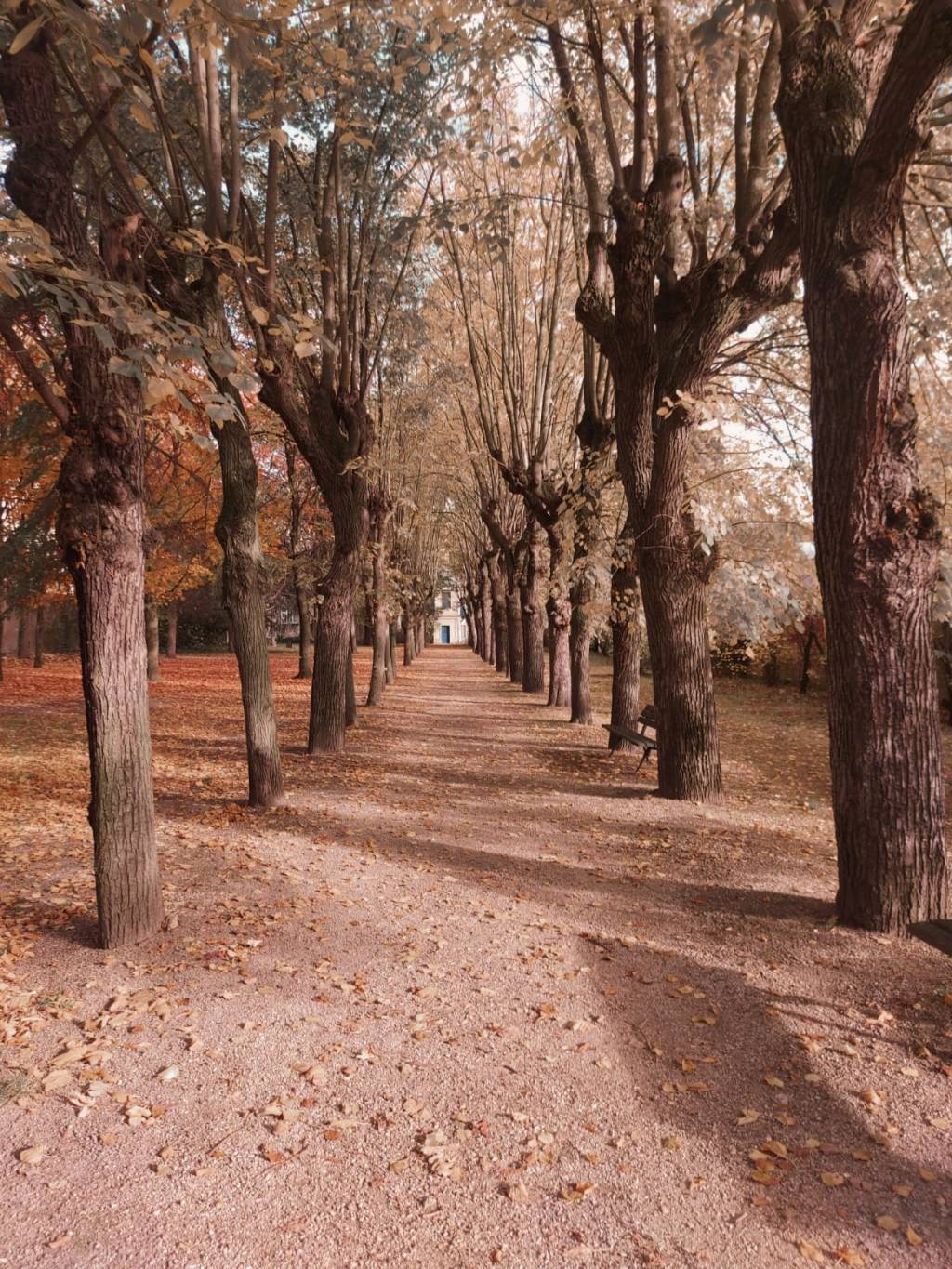
In 1863, all her efforts seemed to pay off. While walking through the Park of Saint-Cloud, on the outskirts of Paris, Marguerite was caught off guard by the rain and hid under a tree for shelter. Moments later, a carriage approached, carrying none other than Emperor Napoleon III himself. Taking pity on the soaked, beautiful young woman, he handed her a blanket to protect her from the rain.

Park of Saint-Cloud – by sortiraparis
At first, she worried about how to return the blanket to the emperor. But then, inspiration struck. She was still looking for a powerful suitor and perhaps, just perhaps, this blanket was her golden ticket. When she returned it, she did so with all the charm and charisma she could summon.
Napoleon III’s preferred mistress
Napoleon III, already taken by her striking looks, now found himself completely smitten with her wit and character. What began as an act of kindness would grow into one of the most talked-about affairs of the Second Empire.
Some time later, Marguerite Bellanger grew from a rain-soaked stranger in the Park of Saint-Cloud to the preferred mistress of Emperor Napoleon III. Their liaison was no longer a passing curiosity, it had become an open secret within the imperial circle and a recurring topic in Parisian salons. Their relationship soon produced a child, and just before the birth, Napoleon III gifted her a house, where she could reside with the baby. A grand gesture that left little room for speculation about the paternal lineage of the unborn baby.

Marguerite with her son – logpateth
Furious and humiliated, the Empress confronted her husband, threatening divorce and demanding that he end the affair immediately. Her ultimatum shook the emperor, who rushed to Marguerite in a haze of guilt and desperation.
But what was meant to be a farewell quickly unraveled. Their confrontation turned into a last, reckless embrace, and the two found themselves, once again, in each other’s arms. The emperor, perhaps overwhelmed by emotion, passion, or simply the weight of the entire situation, returned home and suffered a heart attack.
Empress Eugénie, upon witnessing her husband’s collapse, summoned a doctor without delay, and while Napoleon III was recovering, she went to Marguerite’s residence herself. There, face to face with the mistress who threatened her marriage, Eugénie issued a chilling warning:
“You will kill him if you continue like this.”
It was not jealousy that fueled her words, but fear that this dangerous entanglement, with all its drama and excess, would literally cost the emperor his life.
A new life, part 2
No longer the emperor’s favored mistress, she found herself once again navigating a world in which love, power, and survival were inextricably linked. But Marguerite had never been one to surrender. Still accustomed to her lavish lifestyle, she began searching for a new protector. That search led her to a British army captain living in Paris. He proposed, but Marguerite, still holding out hope that Napoleon III might rekindle their affair, turned him down.
That hope, however, would not last long as by 1870, the world around her began to collapse. The Franco-Prussian War broke out, and the Second Empire together with the emperor’s influence, crumbled. Marguerite left France for England, seeking safety and stability far from the political chaos of Paris. The British captain reappeared and this time, Marguerite accepted his offer.
Their match was not one of romance but of reinvention. The two were married, and when the dust of war finally settled, they returned to Paris, now as a respectable couple moving within aristocratic circles.
For a time, it seemed as though Marguerite might settle into a quieter life. But the woman who had once walked into parties on her hands and defied every expectation of her class and gender could not be tamed so easily. Soon enough, she returned to her old habits. She and her husband gradually drifted apart. Though still married in name, their lives unfolded separately. Marguerite remained a woman of legend and curiosity until the end of her days.
On November 23, 1886, Marguerite Bellanger passed away. She was 48 years old.

The grave of Marguerite Bellanger (Juliette Leboeuf) and her son in Montparnasse – by Androom
She is buried in Montparnasse Cemetery, among poets, artists, philosophers, and thinkers. People who, like her, refused to live a life dictated by others. And long after her name faded from the front pages of Paris, her legacy remains: daring, defiant, unforgettable.
Further reading
Julie Leboeuf, lady Kulbach, « Marguerite Bellanger », 1838-1886 | Les Scandaleuses
Marguerite Bellanger, Mistress of Napoleon III, Emperor of the French | Unofficial Royalty
Cover image: Marguerite Bellanger (around 1865) – by Eugène Desideri

 Timetravelling to Paris
Leave a comment