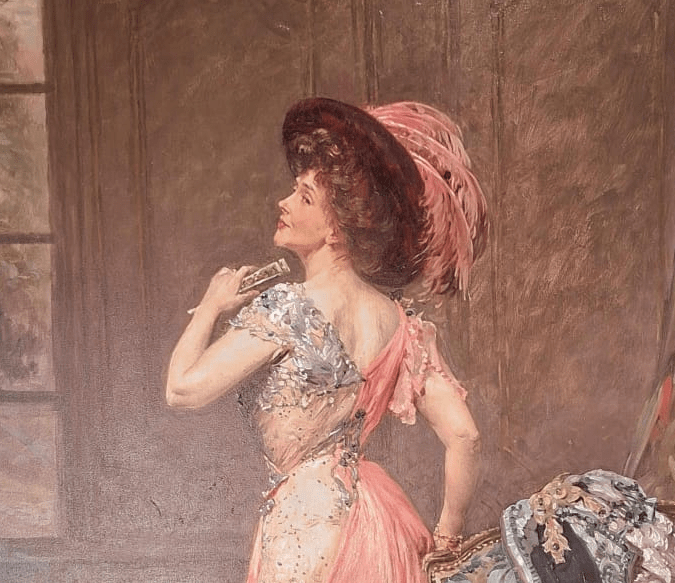
Situated just outside Paris, only a stone’s throw from the terminus of metro line 3, the Musée Roybet-Fould combines 19th-century architecture with a lesser known, but important artistic legacy and a historically significant collection of paintings. At first sight, the building resembles an urban palace, but it is inside, and particularly at the rear of the structure, that its true treasures are revealed. Originally built for the 1878 World’s Fair, the pavilion now serves as a small municipal museum and is a remarkable example of the close connection between Courbevoie and the artistic life of the capital during the late 19th century.
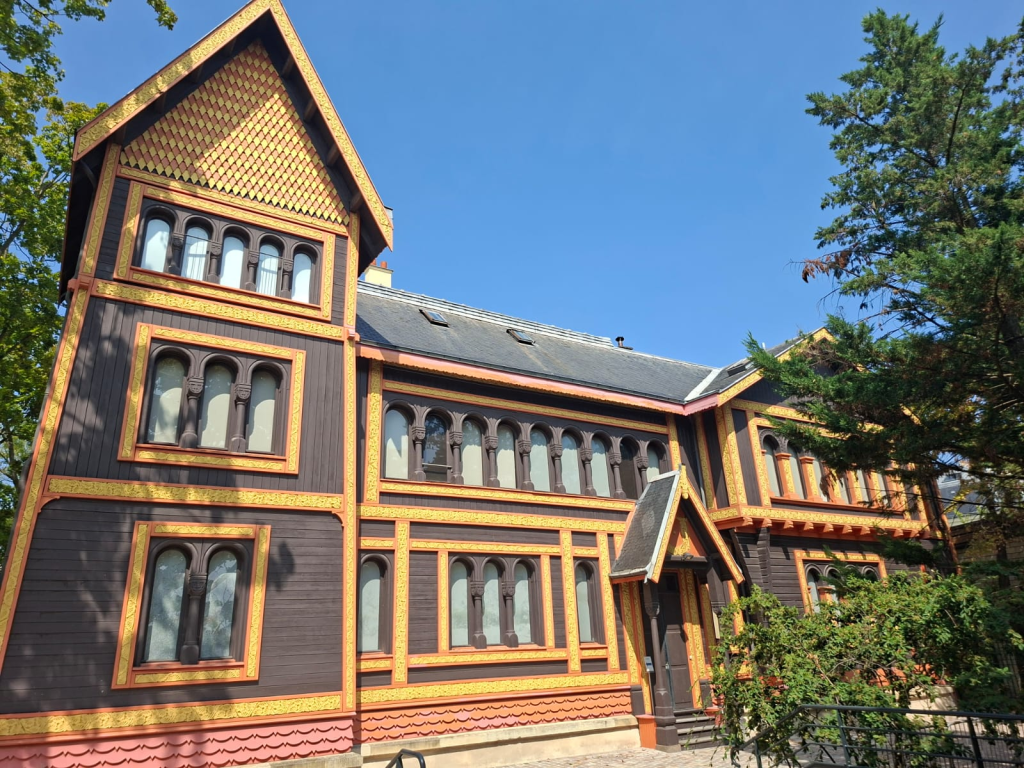
Backside of the museum, showcasing the traditional woodwork.
Architectural origins
The building that houses the museum was first constructed as the Norwegian Pavilion for the Exposition Universelle in Paris (1878). Built entirely from Norwegian pine, it represented a Scandinavian contribution to the fair and showcased traditional nordic woodwork. After the fair, the structure was dismantled and sold to Prince Georges Stirbey, who rebuilt it in Courbevoie as a private atelier.
From Atelier to Museum
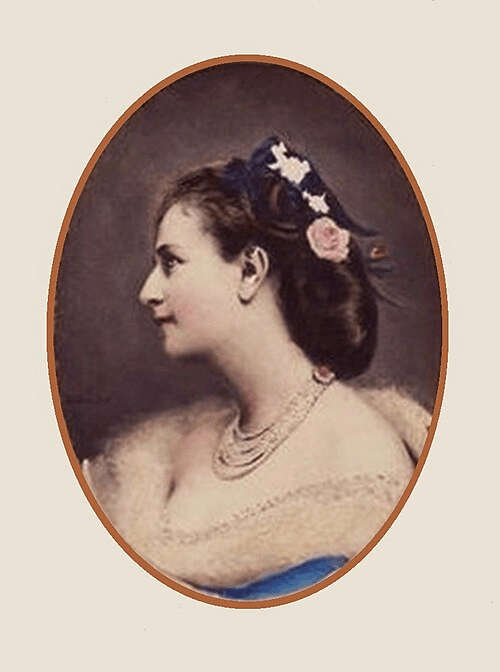
The pavilion became the working studio of Consuelo Fould (1862–1927), a French painter. Consuelo Fould was born into an influential Franco-Romanian family. She was the adopted daughter of Prince Georges Stirbey, a Romanian aristocrat and patron of the arts, and Eugénie Simonin. Her father was Gustave Fould, a French politician, art patron and member of the influential Fould banking family.
Thanks to this privileged and cosmopolitan environment, Consuelo received an excellent artistic education and was introduced early on to the Parisian art scene of the late 19th century.
Deeply influenced by her teacher Ferdinand Roybet, Consuelo became a well-respected painter in her own right and exhibited at the Salon des Artistes Français.
Together with her sister Georgine Stirbey, also an artist, she helped transform the family pavilion in Courbevoie into an artistic retreat and cultural salon. The close intertwining of aristocratic patronage, artistic production and 19th-century academic training makes the Roybet-Fould museum a particularly valuable testimony.
Upon her death, Consuelo Fould bequeathed the building to the city of Courbevoie, stipulating that it should be turned into a museum honouring Roybet’s artistic legacy. The museum finally opened to the public in 1951 and has since become a centre of local artistic heritage
The permanent collection
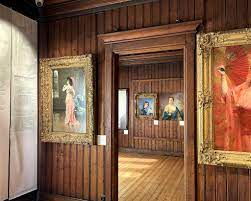
The interior of the museum – Musée Roybet-Fould
The museum’s collection focuses on the work of Ferdinand Roybet and Consuelo Fould, as well as on artists linked to Courbevoie or active at the end of the 19th century. Highlights include:
- Portraits and genre paintings by Ferdinand Roybet
- Symbolist and academic works by Consuelo Fould
- Drawings and sculptures by Jean-Baptiste Carpeaux, Ary Scheffer, Alexandre Séon and others
- Fragments and artefacts from the Tuileries Palace (destroyed in 1871)
- A small but intriguing collection of 19th-century toys and decorative objects
Nearby impressionist treasure
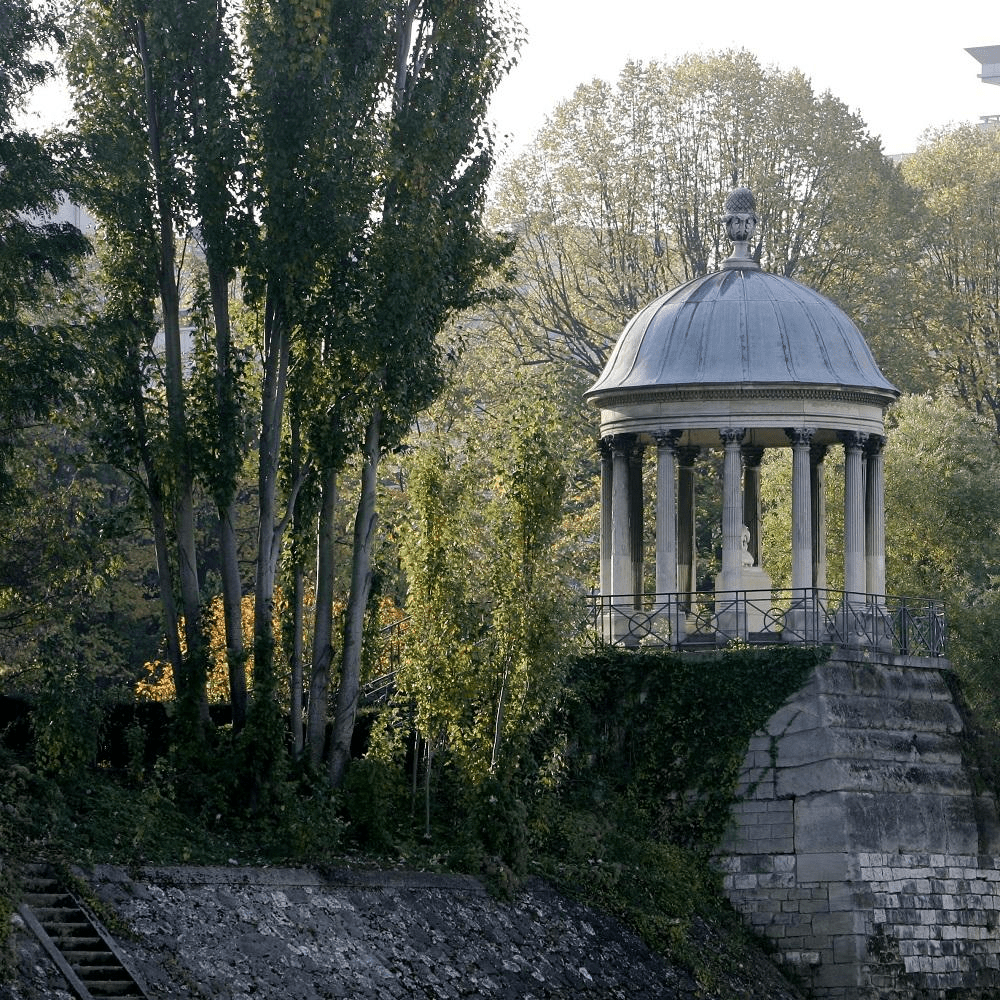
Temple of Love on Ile de la Jatte – ExploreParis
Just across the Seine from Courbevoie lies the Île de la Jatte, which became one of the most iconic sites of 19th-century Parisian leisure culture. In the 1850s and 1860s, as the city expanded and industrialised, the island offered a welcome escape from urban life and attracted a growing bourgeois public. It was a popular destination for Sunday promenades, boating, picnics and open-air entertainment — activities that became key symbols of modern urban society during the Second Empire and the early Third Republic.
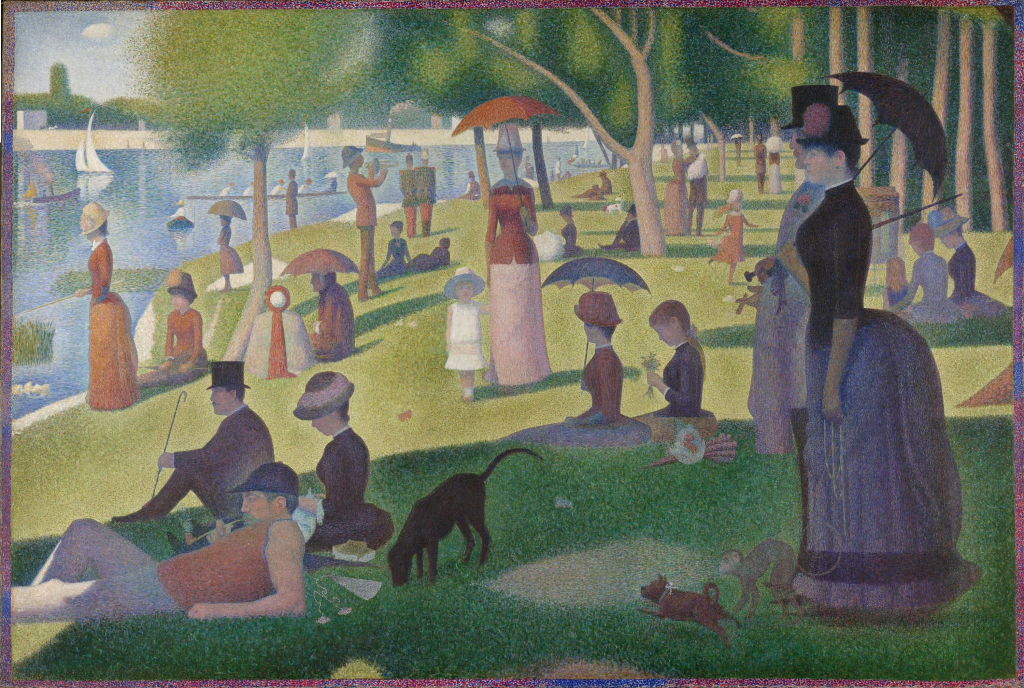
Georges Seurat – Un dimanche après-midi à l’île de la Grande Jatte (1884-1886)- Wikipedia
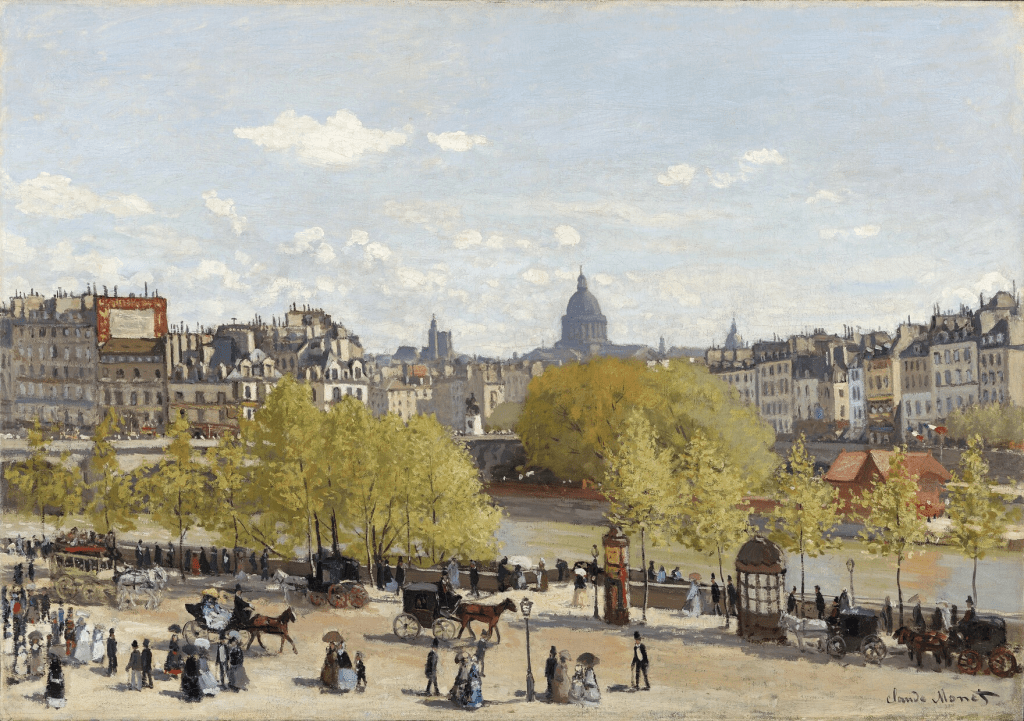
From the 1870s onwards the island also became a major source of inspiration for artists. Figures such as Claude Monet, Vincent van Gogh, Alfred Sisley, and Albert Gleizes all painted views of the Seine in and around the island. The most famous representation, however, is Georges Seurat’s Un dimanche après-midi à l’Île de la Grande Jatte (1884–1886). In this large-scale Pointillist work, Seurat captured the new middle-class culture of leisure in a calm and almost timeless composition, turning the island into an emblem of modern life and aesthetic innovation.
Seen in this light, the proximity of the Musée Roybet-Fould to the Île de la Jatte is more than geographical, it reflects how closely Courbevoie was linked to the broader cultural and artistic dynamics of the Parisian suburbs at the end of the 19th century.
Musée Roybet-Fould
178 boulevard Saint-Denis, Courbevoie (inside Parc de Bécon)
Friday to Sunday (10:30–18:00)
closed Monday–Thursday
Free admission
Website
Cover Image: Ferdinand Roybet – Portrait of Consuelo Fould at Château de Bécon (1893)

 Timetravelling to Paris
Leave a comment