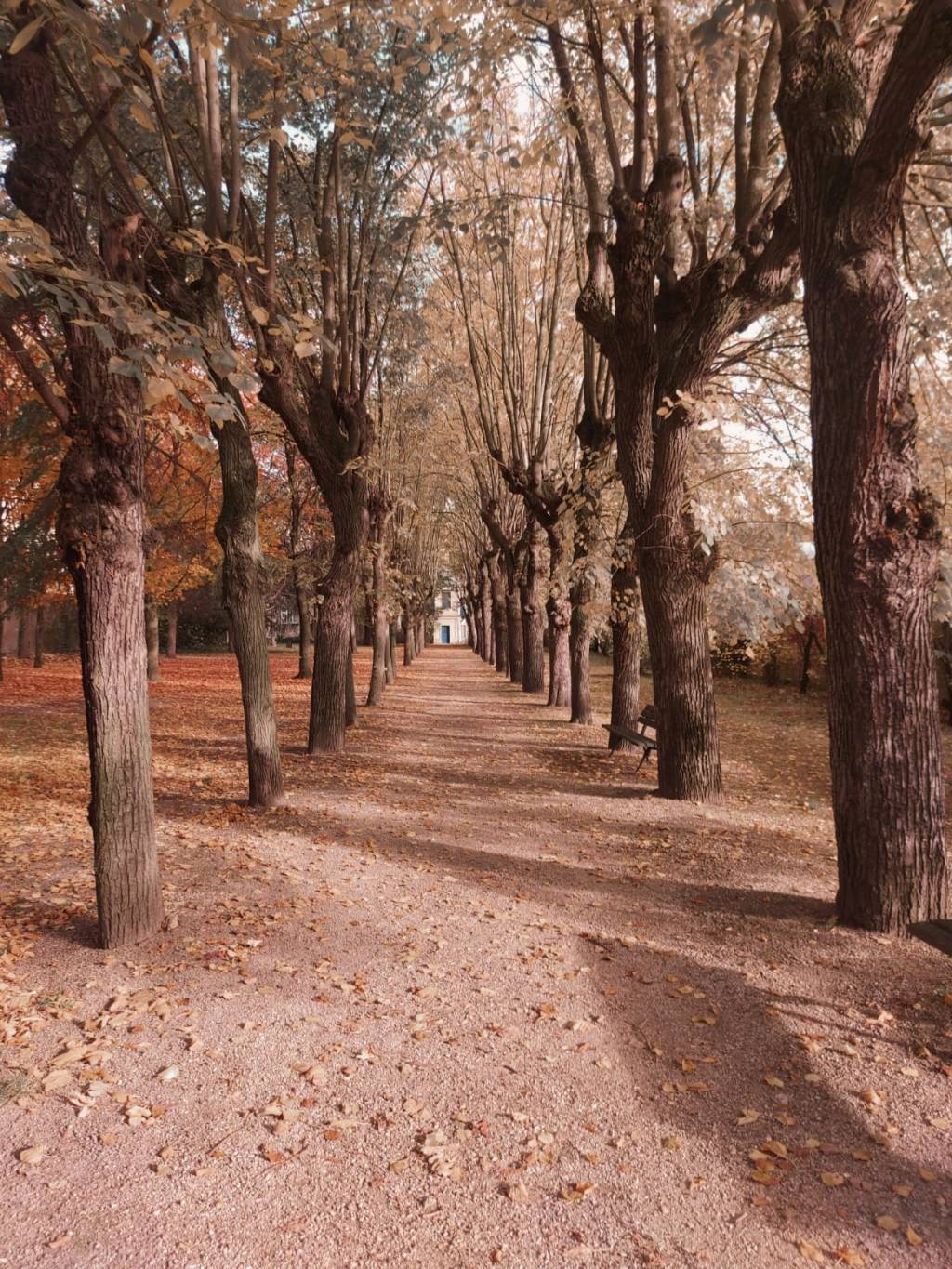
Tucked away behind a discreet wooden gate at 35 Rue de Picpus, far from the crowds that fill Père-Lachaise or Montmartre, lies one of the most poignant places in France: The Cimetière de Picpus, a cemetery serving as a memorial and sanctuary, built upon the very soil where the French Revolution devoured its children.
From the guillotine to grave
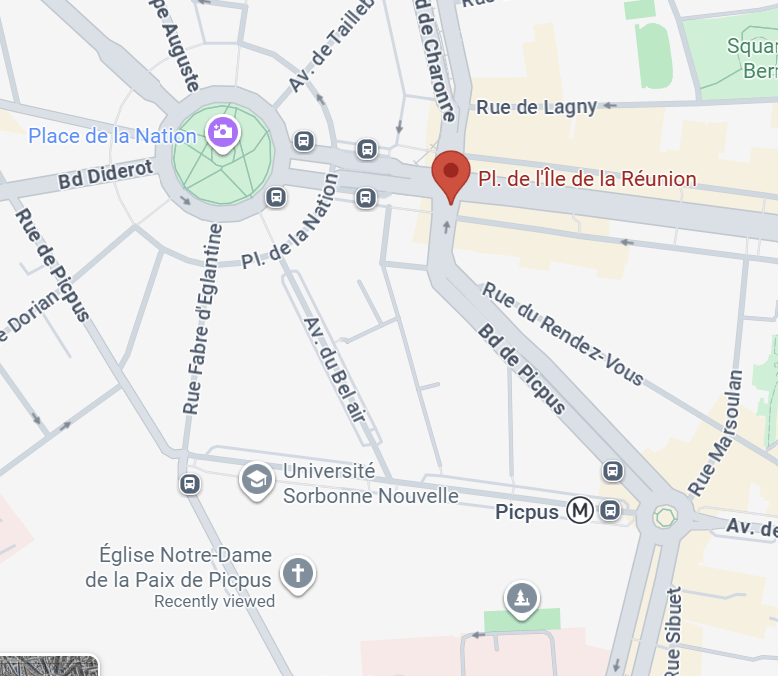
Placement of Place de l’Ile de la Réunion. The cemetery is located in the bottom right – Google Maps
Between 14 June and 27 July 1794, during the feverish weeks of the Reign of Terror, the guillotine at the Place du Trône Renversé (today’s Place de l’île de la Réunion) claimed 1 306 victims, aged 16 to 85. Their social origins spanned nobles, artisans, monks, and peasants. The most famous victims were names that once shone at Versailles: the Duchesses de Noailles, the Marquis de La Fayette’s mother-in-law, grandmother, and sister; the Vicomte de Beauharnais, first husband of the future Empress Joséphine; the Abbess Louise de Montmorency-Laval, deaf and blind, absurdly accused of “plotting deafly and blindly.” Many were innocently condemned, betrayed by suspicion or denunciation. The Revolution’s fury made no distinction between the guilty and the innocent.

The gate through which the carts carrying the bodies entered the cemetery
After decapitation, the bodies were transported by cart at night, behind the walls of a former convent of the Chanoinesses de Saint-Augustin, undressed and ultimately buried in one of the two pits. One holding around a thousand bodies, the other just over three hundred. A third pit was dug, but was ultimately never used.


Above: The only remains of the building where the bodies were undone of all their earthly belongings
Below: The third pit remained unused because the Reign of Terror had ended
Development of the cemetery
In 1797, Princess Amélie de Hohenzollern-Sigmaringen, whose brother had been among the executed, purchased the land containing the pits. Later, Madame de Montagu organized a public subscription to buy the surrounding plots. Thus was born the Cimetière de Picpus, the only private cemetery in Paris. Today, this cemetery is the only one of four cemeteries of the Revolution that still remains. The other ones were:
- the Cimetière de la Madeleine (autour du Chapelle Expiatoire – Paris 8)
- the Cimetière des Errancis ( 97 Rue de Monceau – Paris 8)
- the Cimetière Sainte-Marguerite (Rue Saint Bernard – Paris 11)
The cemetery is organized in two parts. At the forefront stretch simple tombs and stone crosses bearing the great names of the ancien régime: de Noailles, La Rochefoucauld-Doudeauville, Montmorency,… In a modest corner rests General Lafayette, hero of the American Revolution, whose coffin is covered with soil brought from Bunker Hill. Each 4 July, the American flag is raised over his grave in a gesture of enduring gratitude.
In the back of the cemetery, visitors glimpse at the two grass-covered trenches where 1 306 souls lie unnamed.
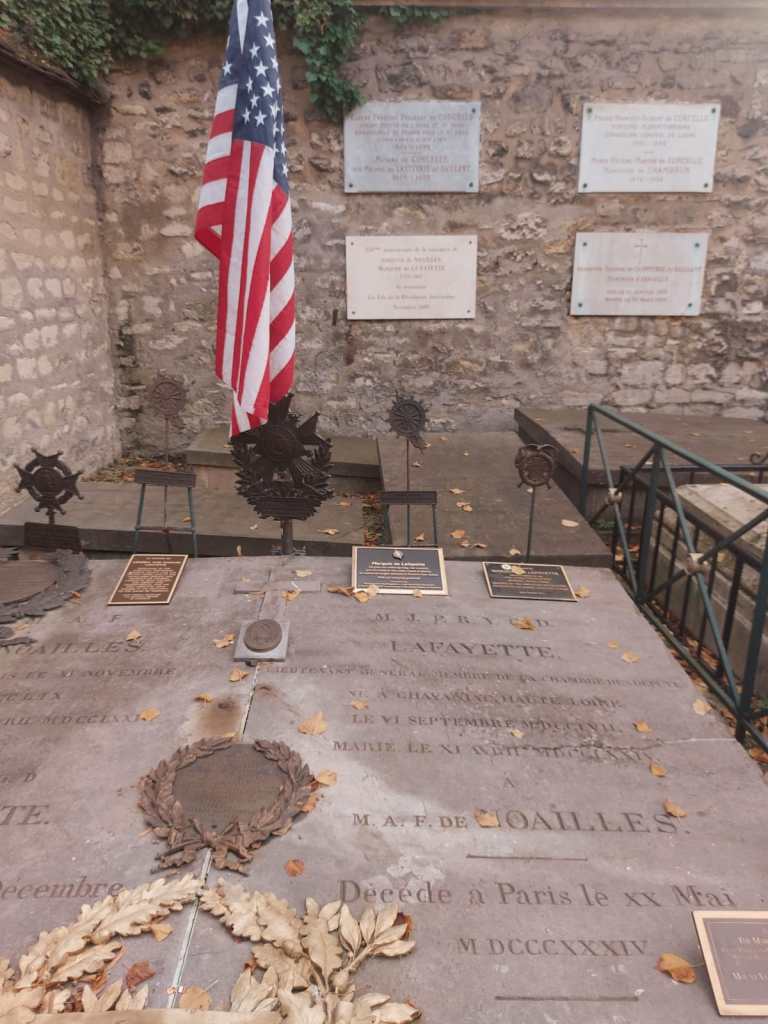
The grave of General Lafayette
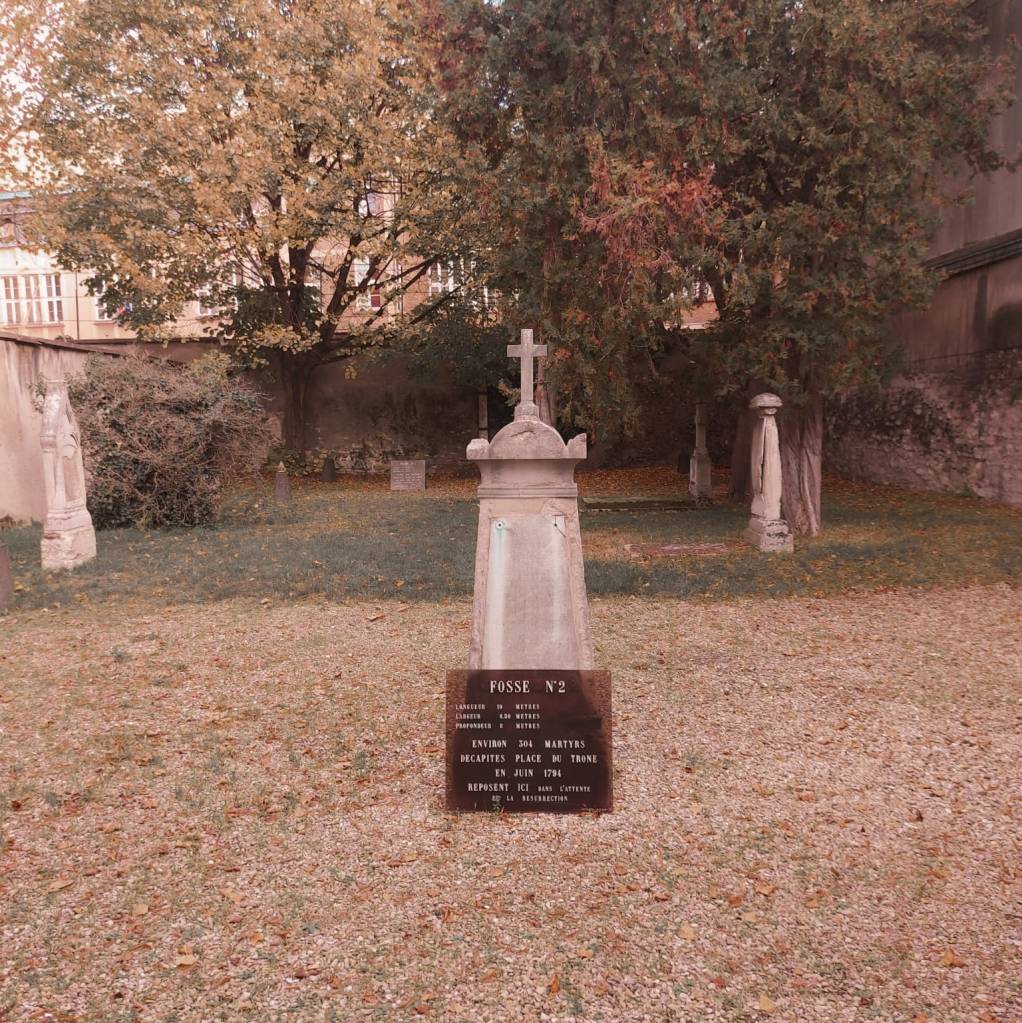
The monument marking the site of the second pit, containing 304 bodies
Whereas originally the cemetery was reserved for the martyrs of 1794 and their descendants, there is one grave has no blood tie to any of the victims. The historian G. Lenôtre (1855-1935) devoted his life to preserving the memory of revolutionary Paris. His book Le Jardin de Picpus turned this secluded plot into a chapter of collective remembrance. In recognition, the families granted him the unique privilege of burial among them.
Picpus’ surprising link with Belgium
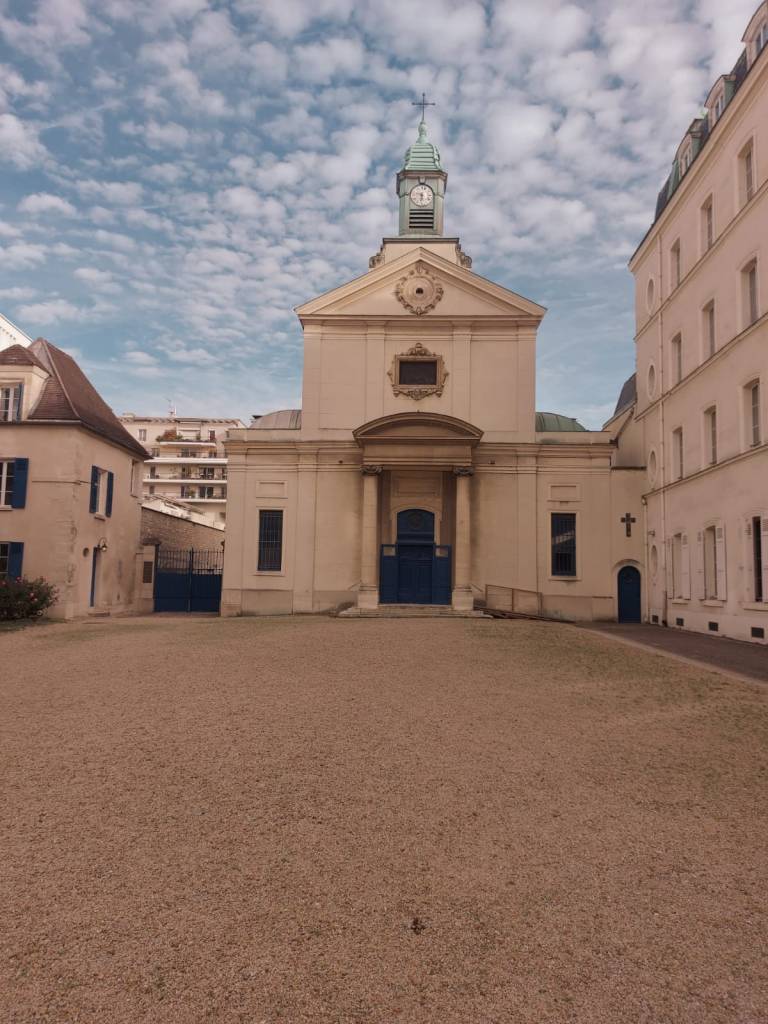
Chapel Notre Dame de La Paix
The story of Picpus did not end with the Revolution. In the nineteenth century, the Congregation that guarded the site became a beacon of missionary zeal. Within the chapel walls, on 7 October 1860, a young Belgian novice named Jozef de Veuster pronounced his perpetual vows in the Chapel Notre Dame de La Paix. The world would later know him as Father Damien of Molokaʻi, the priest who chose to live among the lepers of Hawaiʻi, building homes, schools, and hope in a colony of despair.
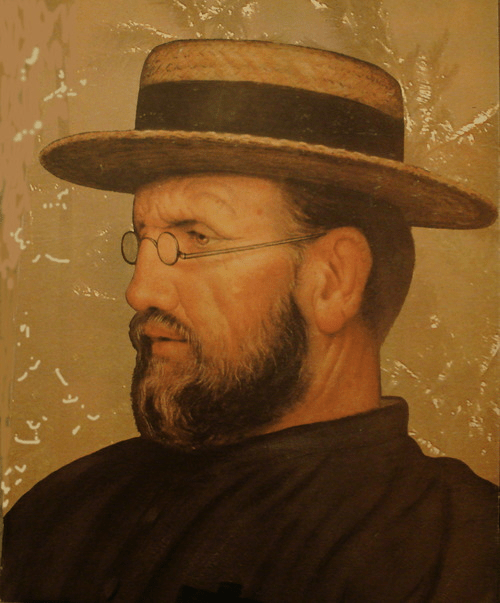
Father Damien – Damiaanactie
From this quiet Parisian sanctuary, born of blood and reconciliation, Father Damien carried the spirit of Picpus across oceans: the conviction that faith must stand beside the abandoned, that compassion can bloom even in exile. He died a leper among lepers in 1889, and in 2009 the Church canonised him as Saint Damien.
Today, the Cimetière de Picpus remains a place of silence and reflection, tended by the same congregation whose prayers have never ceased. The echo of the guillotine has faded, yet the lesson endures: that even amid the ruins of ideology, mercy can take root.
Here, beneath the linden trees and weathered stones, Paris keeps one of its deepest secrets: a small garden where history, repentance, and hope still breathe together.
Picpus Cemetery
35 rue de Picpus, 75012 Paris
Monday–Saturday, 2 p.m. – 5 p.m. (Closed Sundays and public holidays)
2 euro entry fee
Cover image: the garden inside Picpus Cemetery
Sources:
“Picpus, le cimetière très privé des nobles guillotinés.”
https://www.paris.fr/pages/picpus-le-cimetiere-tres-prive-des-nobles-guillotines-782
“Cimetière de Picpus.”
https://fr.wikipedia.org/wiki/Cimetière_de_Picpus
“Cimitière Historique de Picpus”
Jean-Jacques Faugeron


 Timetravelling to Paris
Leave a comment